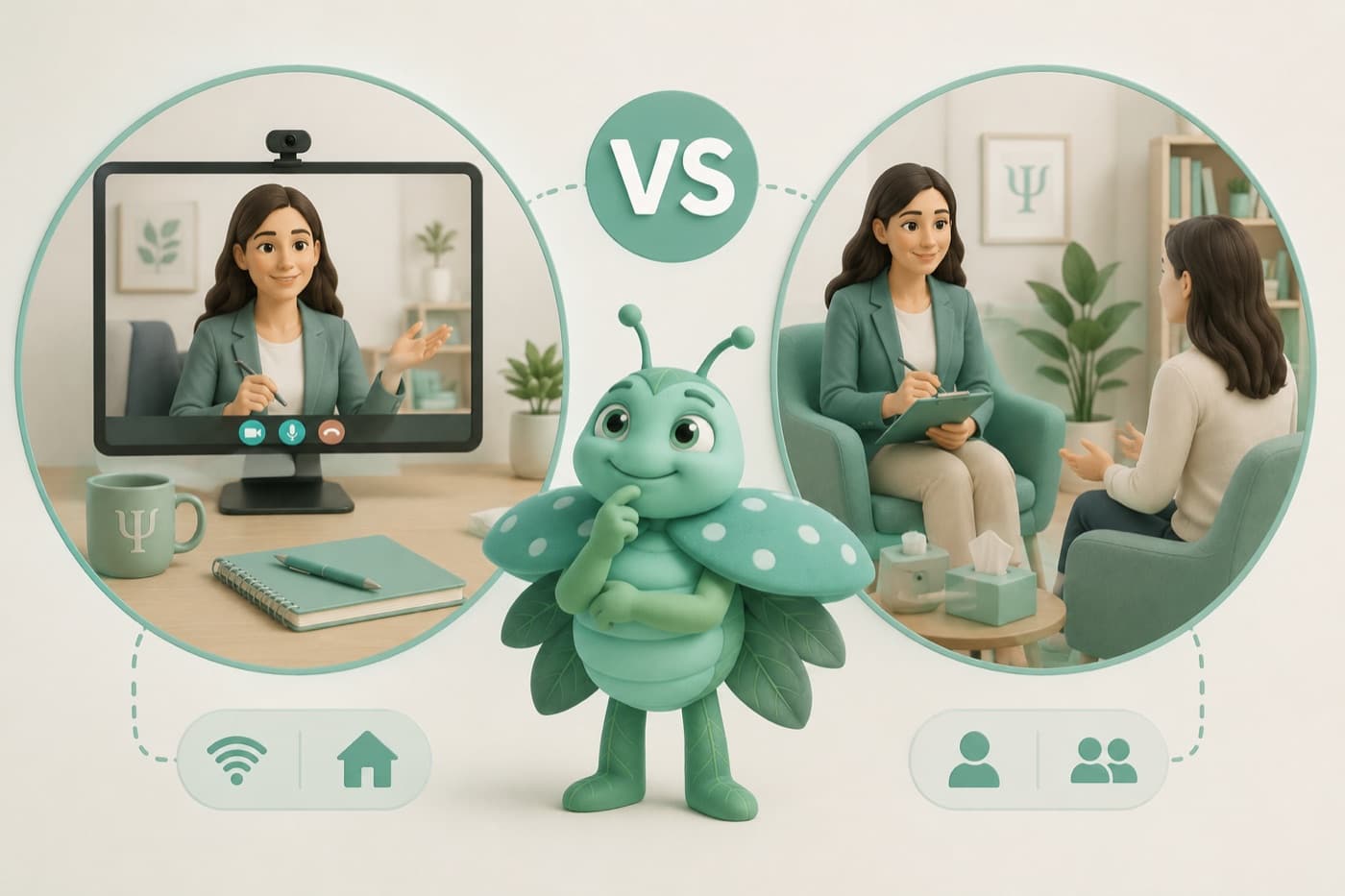
Before the pandemic, online therapy was the backup plan. During it, the only plan. Now, in 2026, most therapists live somewhere in the middle. A few days on video, the rest in the room. Some went fully remote and never looked back. Some never left the clinic at all.
Neither model wins clean. Each does a few things well and quietly fumbles others. So this isn't a "which one's better" piece. It's a closer look at what actually changes the moment a session moves to a screen: the outcomes, the alliance, who fits where, and the honestly-a-bit-messy job of running both at once.
Is Online Therapy as Effective as In-Person Therapy?
The short answer
For most conditions, online therapy delivers outcomes on par with in-person work, and online CBT has strong evidence behind it for generalized anxiety, mild-to-moderate depression, panic disorder, and PTSD. The exceptions are high-risk situations, such as acute suicide risk, marked dissociation, active psychosis, or a substance use disorder in its active phase, where being in the room is a genuine safety margin.
For most presentations, yes. The meta-analyses keep landing in the same place: online therapy produces outcomes comparable to in-person work across a wide span of conditions, and online CBT has a particularly solid track record.
But "comparable" isn't "interchangeable." Some situations genuinely belong in the room.
Think high suicide risk. Marked dissociation. An acute psychotic episode, or a substance use disorder in its active phase. In cases like these, physical presence stops being a preference and becomes a safety margin.
Working with kids and teens online is doable, but it asks more of you. The child needs real privacy, which usually means a parent parked in another room. Play materials have to be within reach. And attention spans being what they are, shorter sessions tend to beat the standard fifty minutes.
Does Online Therapy Weaken the Therapeutic Alliance?
The early worry was that online work would feel cold. Distant. Research mostly hasn't backed that up. If anything, some clients open up faster from their own sofa. Being on home turf, feeling a little less watched, talking to a camera instead of holding someone's gaze across a coffee table, all of it seems to lower the guard rather than raise it.
There's a catch, though. The alliance does run more fragile online. A screen that freezes at exactly the wrong moment. A client dialing in from a different room than usual, kids audible down the hall. Small ruptures that in-person work simply never has to manage. None of them is fatal on its own. But stack a few up over a few weeks and the thread starts to fray.
So online therapists have to work at it differently. A reliable technical setup carries more weight. So do the small rituals on either side of the hour: how you open, how you close, whether the last two minutes get rushed because the next call is already waiting.
Which Clients Fit Online, In-Person, or Hybrid?
There's no clean rule here. A rough map helps, though.
- Lives out of town, or travels constantly
- Mobility issues that make the commute expensive in time and energy
- A schedule so packed there's no hour to spare for traffic
- Social anxiety that turns walking into a clinic into a barrier early in treatment
- Work that needs physical presence, like certain EMDR phases
- Body-focused and somatic approaches
- Child and play therapy
- High-risk cases, or a home that isn't private or safe
Then there's the biggest bucket of all: hybrid.
Most clients land here, honestly. Someone who usually comes in but wants a video session the week work goes sideways. Someone who flips to online for a month while they're traveling for a project. That kind of give slots into an ordinary life far more neatly than a rigid one-or-the-other ever could.
The week that would have been a cancellation
A client who always comes in person hits a brutal week. A sick kid, a deadline, no way to make the Tuesday 4pm slot in person. In a strict in-person practice, that's a cancellation, maybe a two-week gap right when things are hard. Offer a video session instead and the hour still happens, from her kitchen table, after the kid's asleep. The work doesn't stall. The alliance doesn't cool off waiting for the next opening.
How Do You Run a Hybrid Practice Without the Chaos?
The real headache with hybrid isn't clinical. It's clerical.
Is the client who came on video this week in the room next week, or the other way round? Are both kinds of session landing in one note file, or two scattered ones? And that recording from last Tuesday's online session, where exactly did it end up?
A few plain habits keep the whole thing from sliding into a mess.
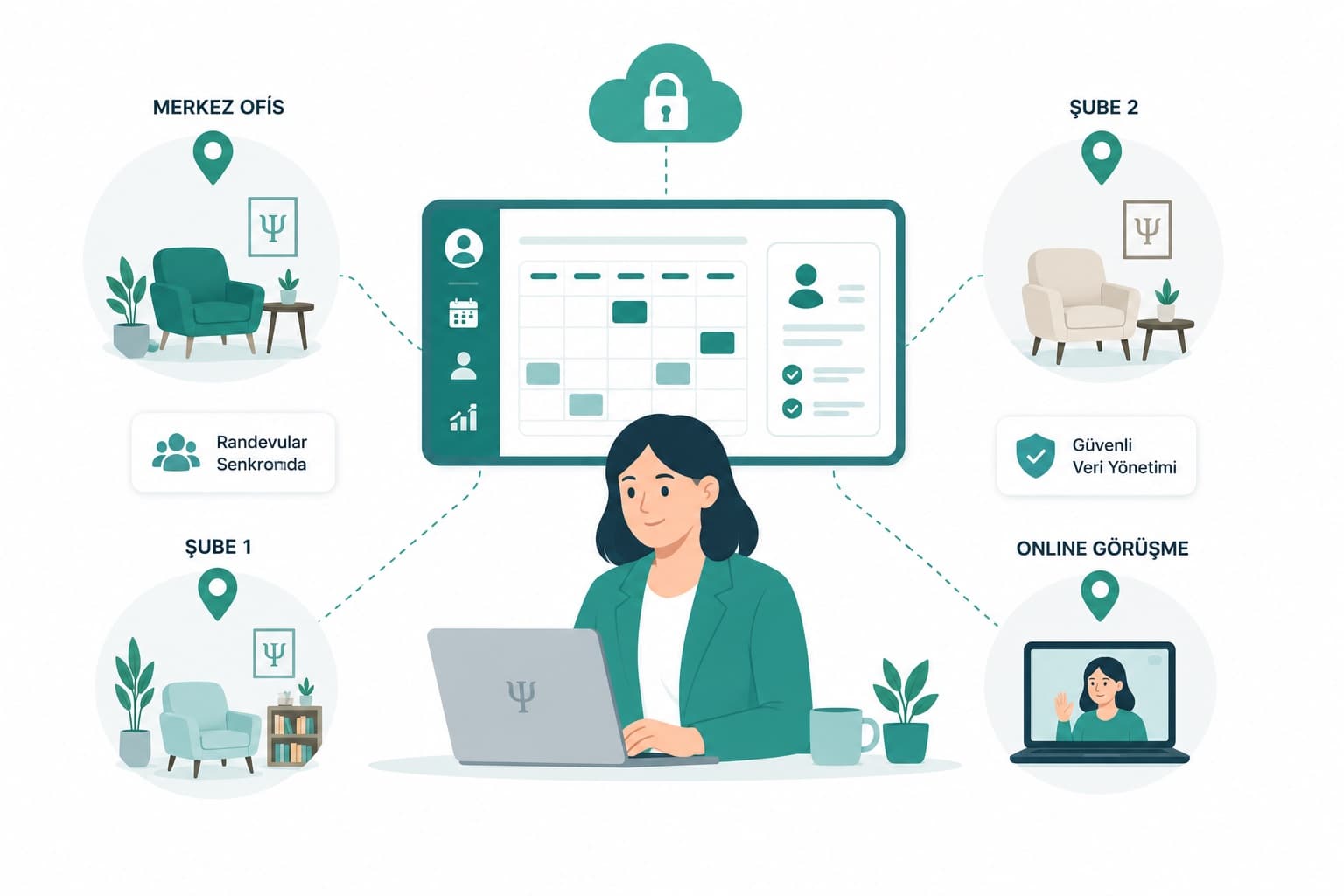
One calendar, not two. Online and in-person appointments belong on the same screen, split apart by a color or a tag, not by living in separate apps. The reminder should shape itself to the session type as well: a video link for one, a street address for the other.
One video platform, chosen once. Hopping to a different app every session wears everyone down, you and the client both. Pick one secure, GDPR-compliant platform and stay put.
One file per client. Notes from the screen and notes from the room go in the same place, in order, with the session type tacked onto the heading. That's the whole trick. If you're rethinking your notes anyway, here's how to write therapy session notes that actually hold up later.
A two-minute tech check. Camera, mic, connection, five minutes before you start. Make it a reflex. A session that opens with "can you hear me now?" loses something you don't get back, and the client paid full fee for the whole hour, not the eight minutes of troubleshooting.
Run this across two locations, or from home part of the week, and keeping the data itself straight becomes its own subject. We dig into that in the guide to managing data as a hybrid therapist.
The Legal and Ethical Fine Print of Online Therapy
A handful of legal things are worth keeping on your radar the moment you start working online.
Cross-border sessions get complicated fast. Treat a client sitting in another country and you may fall under that country's professional regulations. The license that covers you at home? It might not stretch across the border.
The data bar is higher, too. Online session data picks up extra exposure at every hop. You should know exactly where your video platform stores things, whether anything gets recorded, and who else can reach it. If that whole area feels fuzzy, our guide to GDPR compliance for therapists lays it out plainly.
Emergencies also play out differently on a screen.
The crisis you can't drive to
A client goes quiet on video, then says something that stops you cold. And you're across town. You don't have their address on file, the next-of-kin box is blank, and now you're improvising under real pressure. Spend five minutes in session one logging a physical address and an emergency contact, and that same moment plays out completely differently: one call, and help is already on the way while you stay on the line.
Session data is special-category data
Whatever platform you settle on, remember what's flowing through it. Mental-health information counts as special-category data under GDPR. Encryption, tight access control, and knowing exactly where any recordings live isn't a nice-to-have. It's the baseline, and a free consumer video app doesn't clear it.
Should Online and In-Person Sessions Cost the Same?
People disagree here, and honestly both camps have a real point.
One side: same fee, flat. The work doesn't shrink just because it moved to a screen. Same preparation, same expertise, same hour of full attention.
The other side: no clinic rent, no commute, no fixed overhead on an online hour, so a slightly lower rate is fair enough.
In practice, most experienced therapists go flat. One fee, both formats. It's cleaner to explain, cleaner to run, and it keeps the value signal steady instead of quietly telling clients the online version is the discount option.
Why a Flexible, Hybrid Model Usually Wins
The old framing, online or in person, has quietly stopped being the useful question. The better one? Which fits this client, this week.
Treat the two as partners rather than rivals and a practice picks up some genuine, unglamorous advantages.
- Less burnout. A flexible week spares you the commute and the back-to-back clinic grind.
- Better retention. A chaotic week or a work trip stops being a reason to cancel, so clients stay in treatment.
- Wider reach. You can hold onto people out of town, or with mobility difficulties, without giving up in-person work altogether.
- Continuity of care. The same client moves between formats week to week and never loses the thread.
Each model quietly covers the other's blind spots. That's the whole case for building hybrid on purpose instead of backing into it by accident. Curious what that flexibility is actually worth in reclaimed hours? Here's how to calculate practice efficiency.
Running Both with Calemio
Calemio was built with the hybrid week in mind. Online and in-person appointments share one calendar, told apart at a glance by color or tag. The reminder sorts itself out by session type: a video link for the remote ones, an address for the rest. And notes from both formats land in a single client file, in order, so nothing slips through the gap between them. You can start a free trial.
Frequently Asked Questions
Is online therapy as effective as in-person therapy?
For most psychological conditions, meta-analyses show online therapy produces outcomes comparable to in-person therapy, and online CBT is especially well documented for generalized anxiety, mild-to-moderate depression, panic disorder, and PTSD. In-person work is clearly safer for high suicide risk, significant dissociation, acute psychotic episodes, and the active phase of substance use disorders. Comparable does not mean equivalent in every situation.
Does online therapy hurt the therapeutic relationship?
The fear that online work feels cold has largely not held up in research, and some clients actually open up more easily from the safety of their own home. The alliance does tend to be more fragile online, though, because dropped connections and small technical glitches can wear at it over time. Therapists working online should invest in a reliable setup and stay deliberate about their pre- and post-session routines.
Which clients should choose online versus in-person therapy?
Online work suits clients outside the city, those with mobility difficulties or packed schedules, people whose social anxiety makes entering a physical space a barrier early on, and frequent travelers. In-person work is better for approaches needing physical intervention such as certain phases of EMDR, body-focused methods, child and play therapy, high-risk cases, and clients whose home is not private or safe. Most clients actually fit a hybrid model that mixes both.
How do you manage a hybrid therapy practice without confusion?
Keep online and in-person appointments in one calendar, distinguished by color or tag, and use a single secure, GDPR-compliant video platform for every online session. Store notes from both formats in one client file in chronological order, adding the session type to each heading. A quick camera, microphone, and internet check five minutes before each online session prevents most disruptions.
What are the legal risks of providing online therapy?
Treating a client based abroad may subject you to that country's professional regulations, and a license valid in one jurisdiction may not cover another. Online session data also carries extra risk, so you should know where your video platform stores data, whether sessions are recorded, and who can access them. Because a crisis can happen mid-session, collect the client's physical address and a next-of-kin contact in the first session.
Should online sessions cost less than in-person sessions?
It is a debated question. One view holds that the fee should be lower online because you avoid fixed costs like clinic rent and commuting, while another holds that the same time, preparation, and clinical work deserve the same fee. In practice, most experienced therapists charge a single flat fee for both value perception and operational simplicity.
Related articles



Try Calemio for free
Encrypted, compliant and simple. Built for independent therapists and clinics.
Start free