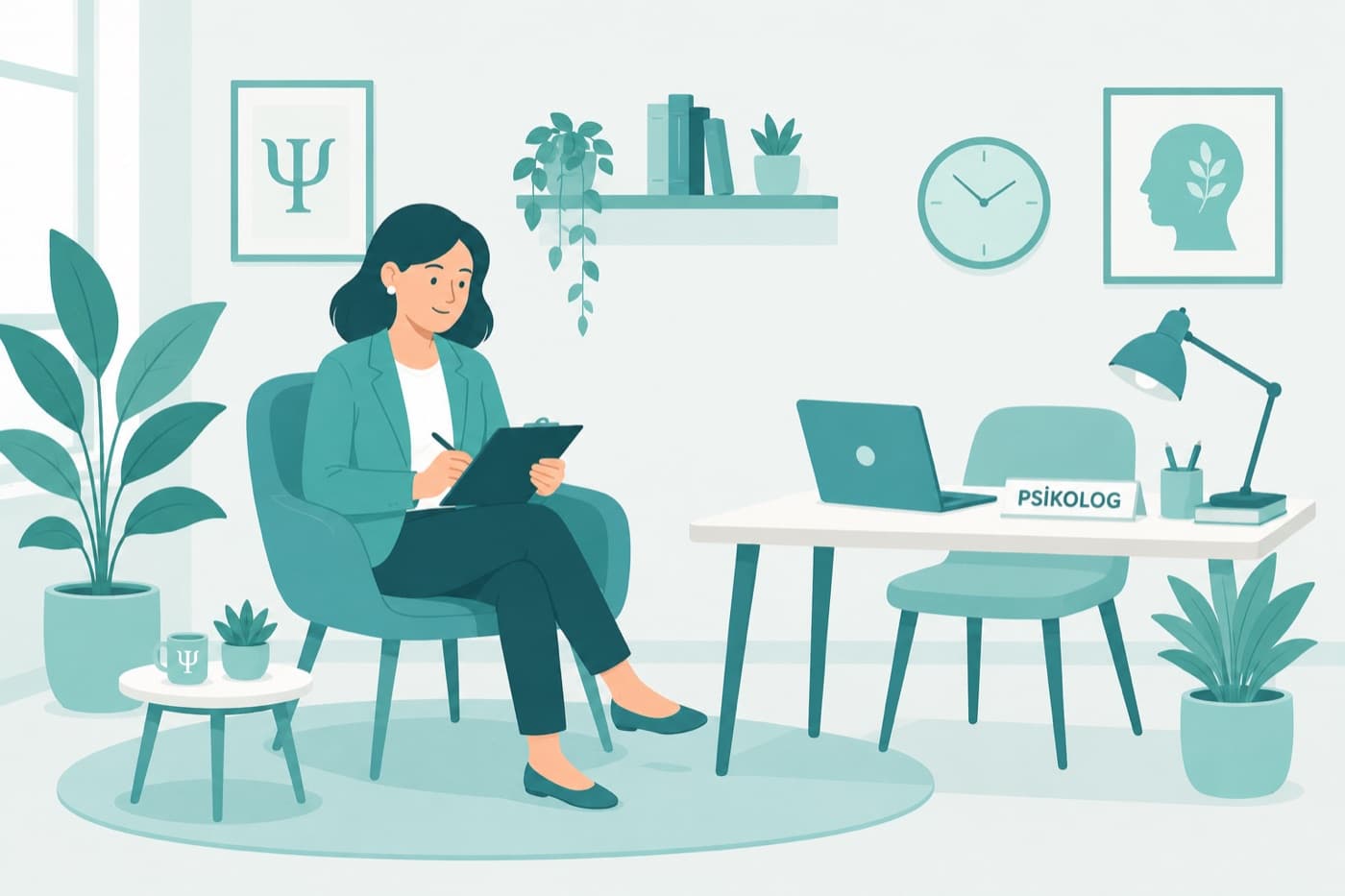
There's a certain safety in working inside an institution. The income is steady. Client flow gets handed to you, and most of the admin is somebody else's headache. Then something shifts. A lot of psychologists reach a point where they want to run the work their own way: their own therapeutic style, their own session length, the clients they actually choose to take on.
That's usually where the private-practice idea starts. Exciting, sure. Also a pile of open questions. Which permits? How does the tax side work? Where do you even find a room? And the one that keeps people up at night: where on earth do the first clients come from?
This guide is a full roadmap for psychologists in Turkey weighing up an independent practice in 2026. We'll go through the legal side, the space, the money, the digital setup, and how to land those first clients, roughly in the order you'll actually bump into them.
Why Open Your Own Private Practice?
For most clinicians the pull isn't independence for its own sake. It's the freedom to shape the work. To decide how you practice, who you sit with, how your week gets built. A private practice lets you create the therapeutic environment you believe in instead of squeezing yourself into someone else's.
That freedom comes at a price, though. All the things the institution quietly handled, permits, taxes, scheduling, record-keeping, data protection, now land squarely on your desk. Knowing what's coming before you start is the whole difference between a stressful launch and a calm one. The sections below take each piece in turn.
What Are the Legal Requirements to Open a Private Practice?
In Turkey, the psychology profession still isn't covered by a single overarching law. But the clinical psychologist title, and the process of opening a practice, are shaped by the relevant regulations.
To practice as a specialist or clinical psychologist, you'll generally need a graduate (master's) degree. Psychiatrists are a separate case: they're physicians who completed a psychiatric specialization, and they hold different legal authority.
Opening the practice itself means applying to the Ministry of Health (Turkey's central health authority), having your premises inspected for compliance, and getting an authorization certificate. Details shift a little from city to city, so pull the current document checklist from your provincial health directorate rather than assuming anything.
The short version
To open a private practice in Turkey you generally need a master's degree to use the clinical psychologist title, an application to the Ministry of Health, a premises inspection, and an authorization certificate. Budget four to six weeks, and get the exact document list from your provincial health directorate before you start anything.
One reassuring note. It looks bureaucratic at first glance, but the whole thing usually wraps up inside four to six weeks. Prep ahead, gather the documents in the right order, and you shave off most of the waiting.
How Do You Choose the Right Location for Your Practice?
Weigh a space along three lines: how reachable it is, whether it actually works as a therapy room, and what it costs.
Accessibility. Start with where your target clients already are. A city-center spot is pricey but visible. A quieter neighborhood costs you less in rent and more in marketing effort. And don't skip transit access, because a good share of your clients will be making this trip every single week.
Physical suitability. The basics: a separate waiting area and therapy room, sound insulation, some natural light, a restroom within reach. Working with kids? Add a play space and furniture you can move around.
Cost. Assume year one is unpredictable and plan for exactly that. Keep rent under 25 to 30 percent of the revenue you expect in a normal month. Sharing an office, or renting a room for just a few days a week, is often the sensible middle ground while you find your feet.
How Does Tax and Financial Setup Work for Independent Psychologists?
Work independently and, for tax purposes, you're a self-employed professional. That comes with a few standing duties: issuing a receipt for every payment you take, filing quarterly provisional tax returns, and submitting an annual income tax return.
Get an accountant. This one's almost non-negotiable. Yes, there's a monthly fee, but it kills the error risk and hands you back hours you'd otherwise pour into spreadsheets.
A few practical habits. Issue receipts for all income. Sort your social security under the self-employment scheme (Bağ-Kur in Turkey). And keep monthly records of what you spend, rent, digital tools, stationery, supervision, because most of it is tax-deductible.
One more thing that punches well above its weight: open a bank account that's only for the practice. Money in, money out, one place. Tax calculations that used to swallow a whole weekend suddenly take minutes.
What Digital Infrastructure Does a Modern Practice Need?
Opening in 2026? Then your digital setup matters at least as much as the room itself. Here's the short list.
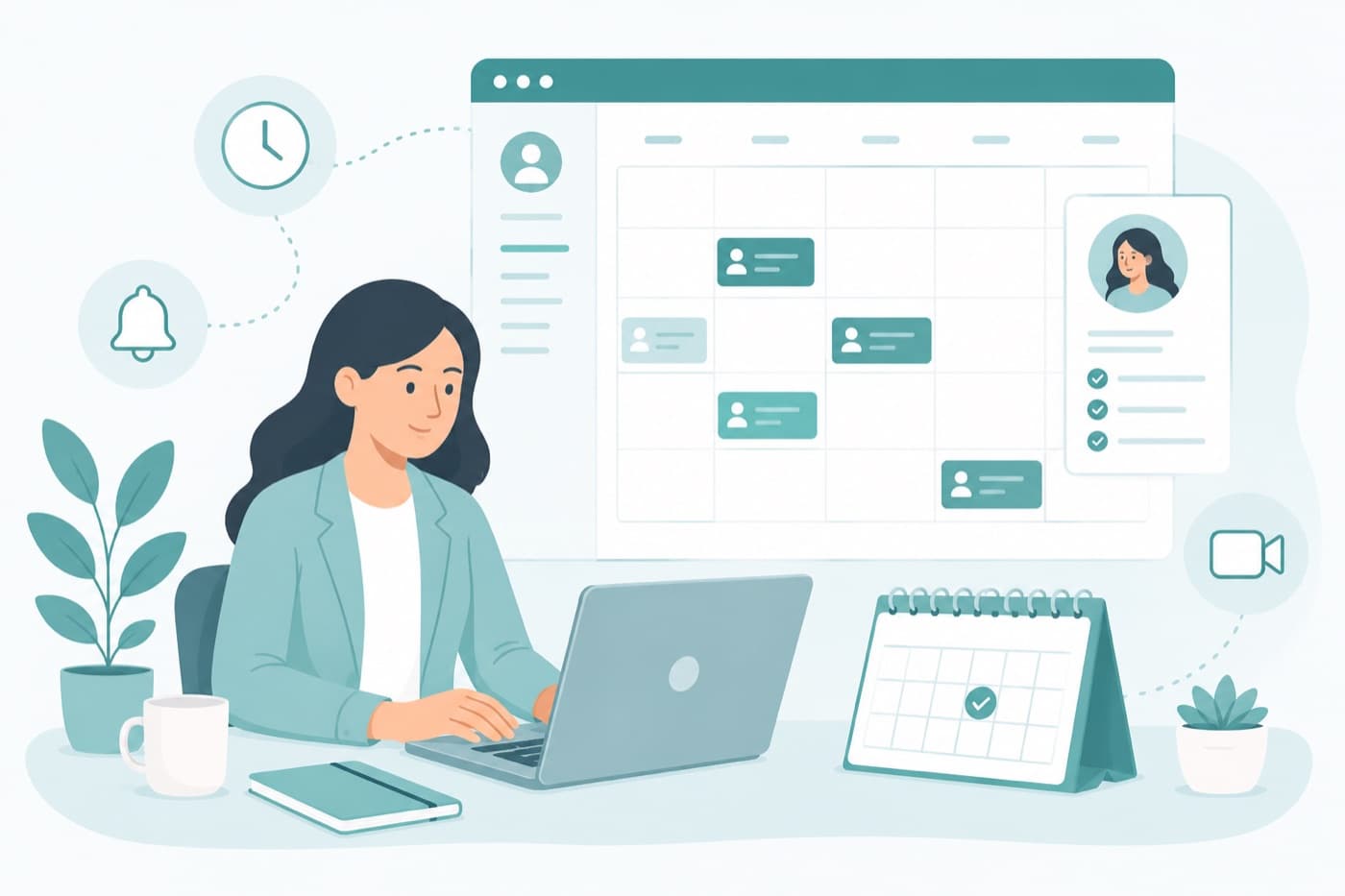
Appointment software. A paper diary won't cut it, and neither will a spreadsheet. From day one you want a tool that's KVKK-compliant (Turkey's data-protection law, the local GDPR), fires off automatic reminders, and handles intake. Not sure what to look for? Start with what therapist scheduling software actually is.
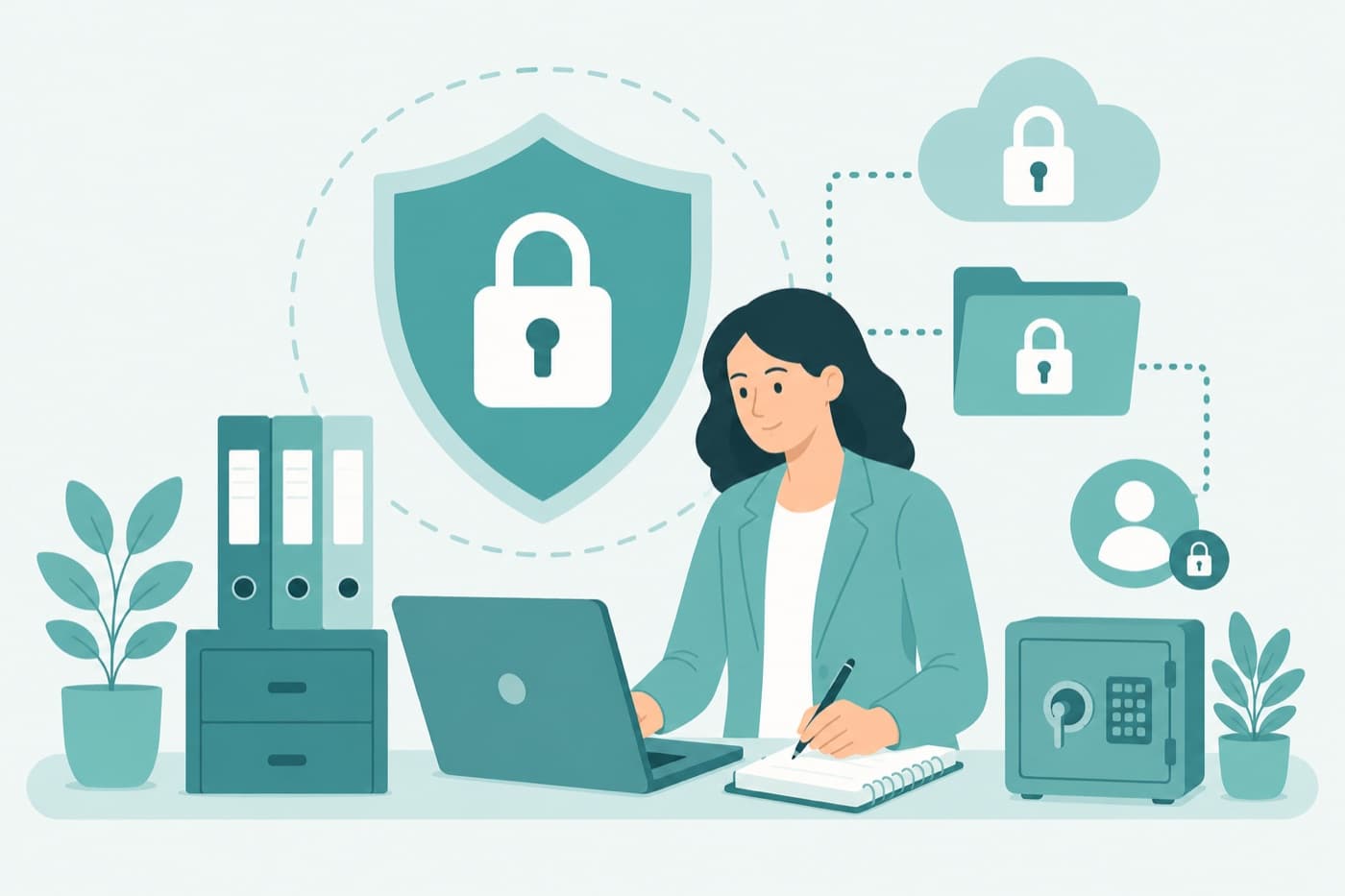
Encrypted notes. Session notes on your phone or sitting on your desktop are a breach waiting to happen. You need them encrypted, backed up, and locked to you alone. Our guide to writing session notes covers the how.
A website. People should be able to find you when they search. Nothing elaborate, though. One clean page saying who you are, what you work with, and how to reach you does the job.
A way to take payment. Card payments make life easier for clients. Have your options lined up: a card reader, a virtual POS provider, or plain bank transfer.
Communication boundaries. Handing out your personal WhatsApp feels friendly on day one. Then it eats your evenings and blurs every privacy line you've got. Push that traffic into a proper booking tool and reclaim your nights.
How Should You Set Your Session Fees?
Pricing is one of the hardest calls a new therapist makes. Go too low and you feel undervalued. Go too high and you lie awake wondering if anyone will ever book.
So try this. Answer three questions. What do senior psychologists in your area charge per session? What's the minimum rate the Turkish Psychological Association (Türkiye Psikologlar Derneği, TPD) recommends? And how many sessions a month do you actually need to keep the lights on?
Where those three answers overlap, that's your starting fee. Keep the asymmetry in mind, too: nudging a rate up over time is easy, but walking one back is genuinely painful. So when in doubt, open about 10 percent under your target and revisit it once a year.
Where Do Your First Clients Come From?
The room's ready. The systems are live. The website's up. Now the question that actually matters: who fills the chair?
Five sources, mostly.
Your referral network. Former colleagues and supervisors, the professors from your program. This is where most first referrals come from. Telling people directly that you've opened, one conversation at a time, converts better than anything else you'll do early on.
Physicians and family doctors. Psychiatrists, internists, pediatricians nearby can all send people your way. Drop in, introduce yourself, leave a few brochures. It compounds over time.
Online directories. Platforms like Doktortakvimi, Psikolojidegunlik, and Therapyturkiye put you in front of people who are already looking.
Google and SEO. Turning up for a search like "clinical psychologist in Kadıköy" is slow to build and then pays off for years. Content is the engine here: blog posts, a solid FAQ page, the exact questions your clients are already typing.
Social media. Instagram is genuinely active in Turkey. But the burnout is real, so ease in. Pick a pace you can hold for months, not a sprint you'll abandon by week three.
What Should You Expect in Your First Year?
Year one is a building year. True for almost everyone. Active clients might sit around 5 to 10 in the first three months, climb to 15 to 20 by month six, and reach 25 to 35 by the time the year closes. How fast? That really comes down to your marketing and your location.
Illustrative, not a promise. Your curve moves with location and how much marketing you actually do.
On the money side, breaking even in year one is a realistic goal. Plan to start turning a profit from year two. A personal cushion during this stretch, or a part-time income running alongside, takes a real bite out of the stress. Want to put actual numbers to the time a good setup saves you? Here's how to calculate practice efficiency.
What to Watch Out For: Build Slowly and Solidly
Opening a practice is a marathon, not a sprint. Everything can feel stuck in the first three months, and that's normal, not a warning sign. It's in year two that the systems you built quietly start paying you back.
Two mistakes trip up new practitioners more than any others.
The first? Loading up on fixed costs, rent especially, before the client flow is anywhere near predictable.
When the rent moves faster than the clients
A new practice signs a bright city-center office on a twelve-month lease, betting the calendar fills by spring. Month three: four regulars, roughly one no-show a week, rent swallowing most of what comes in. By the time referrals finally pick up, the savings are gone and the stress isn't. A shared room two days a week, scaled up once the flow was steady, would have bought the same start for a fraction of the risk.
The second is treating data protection as a someday problem. Notes on a personal device, a private WhatsApp number handed around, all convenient early on and all quietly stacking up risk. Under KVKK that's not just awkward, it's legal exposure.
The notes on the personal laptop
Session notes saved to the desktop, client numbers in a personal WhatsApp, a spreadsheet synced to a phone that goes everywhere. Feels efficient for a few months. Then the laptop goes missing on a Tuesday, and special-category health data is suddenly sitting in someone else's hands. On an encrypted, access-controlled system, that same loss is a shrug and a fresh login.
Data protection isn't the afterthought
Session notes are special-category health data under KVKK, Turkey's equivalent of GDPR. Keeping them encrypted, backed up, and access-controlled isn't a nice-to-have. It's the baseline, and a laptop desktop or a personal phone won't get you there.
Getting your legal, financial, and digital foundations right at the start is far cheaper than unpicking them later. Want the full ground rules? We go deep in the KVKK and GDPR compliance guide for therapists.
How Calemio Helps You Run Your Private Practice
Calemio was built for therapists opening or running an independent practice. Appointments, automatic reminders, encrypted notes, intake forms, all ready from day one, so the admin side runs itself while you stay present with your clients. Automatic SMS and reminder messages keep no-shows down, encrypted records keep you KVKK-compliant, and the whole thing lives in one place instead of scattered across notebooks, spreadsheets, and your phone.
You can start on a forever-free plan and set it up right now.
A Quick Checklist Before You Open
Getting ready to launch? Run down this list first. For the day-by-day version, our 30-day checklist for opening a practice breaks it into daily steps.
- Master's degree and clinical psychologist title sorted.
- Ministry of Health application filed, premises inspection passed, authorization certificate in hand.
- Accountant engaged, self-employment tax and Bağ-Kur registration done.
- Space chosen with rent under 25 to 30 percent of expected monthly revenue.
- KVKK-compliant scheduling software with automatic reminders and intake forms is live.
- Session notes stored in an encrypted, backed-up system, not on a personal device.
- A simple website is up, and your first referral conversations have started.
- A starting fee is set, with a yearly review already on the calendar.
Frequently Asked Questions
What do you need to open a private therapy practice in Turkey?
You generally need a graduate (master's) degree to use the clinical psychologist title, an application to the Ministry of Health, a premises inspection for regulatory compliance, and an authorization certificate. Requirements can vary slightly by city, so it's best to get the current document checklist from your provincial health directorate. The process typically takes four to six weeks when documents are prepared in advance.
How much does it cost to open a private practice?
The main costs are rent, furnishing the space, digital tools, accounting, and social security contributions. A common guideline is to keep rent below 25 to 30 percent of your expected monthly revenue. Sharing an office or renting a room only on specific days is a lower-cost way to start while your client flow is still unpredictable.
How do I set my session fee as a new therapist?
Look at what senior psychologists in your area charge, the minimum rate recommended by the Turkish Psychological Association, and how many sessions per month you need to be financially viable. Set your starting fee where those three answers intersect. Because raising a fee is much easier than lowering one, starting around 10 percent below your target and reviewing yearly is a safe strategy.
How do I find my first therapy clients?
The strongest early channel is your referral network: former colleagues, supervisors, and university professors. Physicians and family doctors, online directories, Google and SEO through your website and blog content, and social media round out the five main sources. Personally telling people you've opened your practice tends to convert best in the beginning.
What software or digital tools does a private practice need?
At minimum you need KVKK-compliant appointment management software with automatic reminders and intake forms, an encrypted and backed-up note system, a simple website so clients can find you, and a payment method such as a card reader or virtual POS. Keeping client communication in a professional tool rather than your personal WhatsApp protects both your privacy and your evenings.
How long until a private practice becomes profitable?
For most independent therapists the first year is a building year, with active clients growing from roughly 5 to 10 in the first three months to 25 to 35 by year's end, depending on marketing and location. Breaking even in the first year is realistic, with profit typically starting from the second year. A personal financial cushion or part-time income during this period reduces stress significantly.
Related articles

Try Calemio for free
Encrypted, compliant and simple. Built for independent therapists and clinics.
Start free